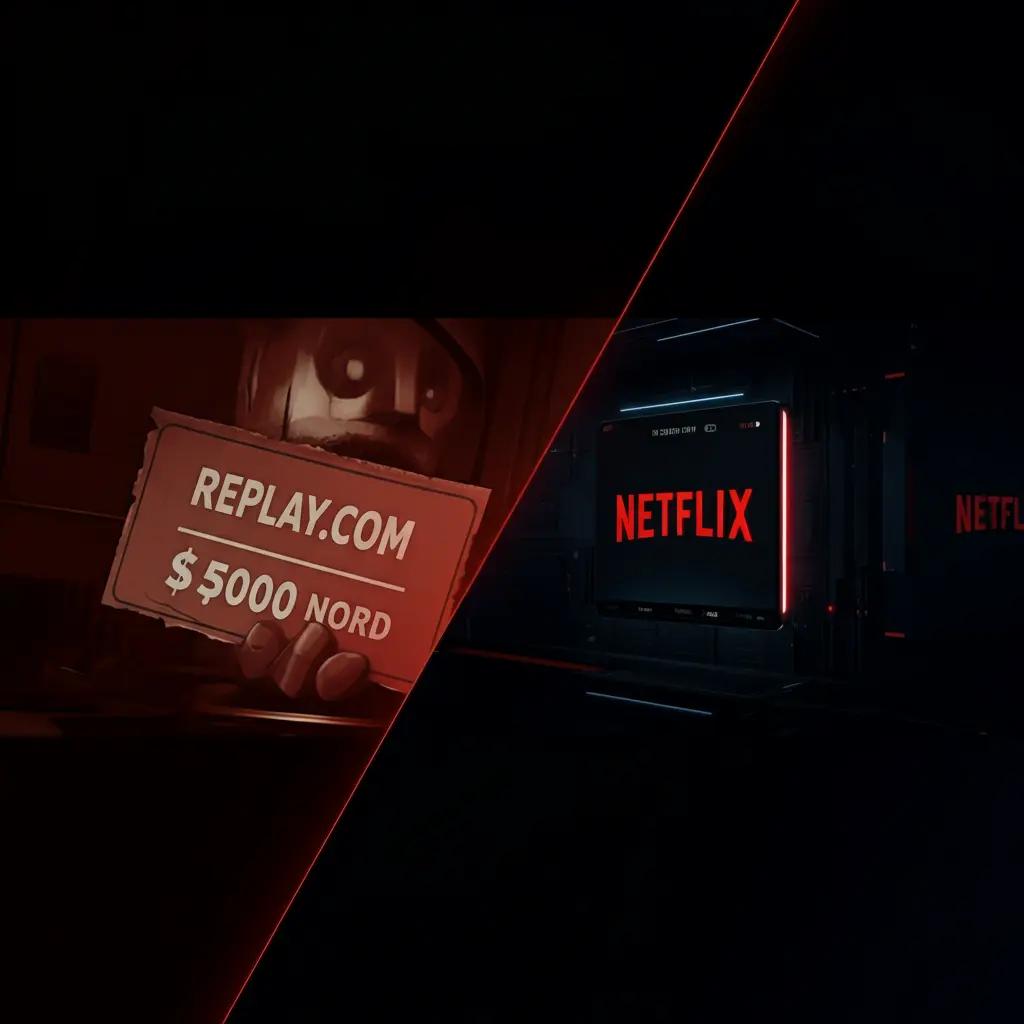
Quick answer: Netflix is called Netflix because it is a compound of "net" (the internet, how you ordered) and "flix" (films, what you got) — a name Marc Randolph and Reed Hastings settled on in 1997 for a DVD-by-mail service. Randolph's first choice was Replay, but Replay.com was priced at $50,000, which a pre-launch startup would not pay, so he passed.
The shortlist they rejected on the way — Netflicks, NetPix, WebFlix — is the useful part. "Netflicks" was the obvious spelling and the reason they dropped it: it is longer, and the "ck" is the kind of detail people get wrong when they type it from memory. The name that survived was the one that stayed correct when spoken aloud and did not tie the company to DVDs, which is why it still fits a business that no longer mails anything.
Naming your own company? Check a name across domains and social handles before you commit to it.
What Netflix’s Naming Story Teaches Founders
Netflix’s founders passed on Replay.com for $50,000 and dodged naming disasters (Netflicks, NetPix, WebFlix) before landing on a future-proof name. The lesson: a perfect name doesn’t guarantee success, but a bad one—hard to spell, trendy, or too product-specific—will absolutely hold you back. Here’s exactly what happened and what every founder should learn.
still available?
The Domain That Got Away: Replay.com
Before binge-watching existed, Netflix was just a DVD-by-mail service. Randolph’s first choice for the name was Replay.
Short. Relevant. Easy to say.
The perfect name—on paper.
But Replay.com cost $50,000 in 1997. That was “sell your car” money for a pre-launch startup. Randolph passed.
Today? A one-word .com for 50K is a bargain.
But back then? Totally unrealistic.
Passing on Replay forced them to look for something more scalable—and more affordable. It’s a classic founder dilemma:
Do you burn your runway chasing one “perfect domain,” or pick something available and start building?
Netflix’s story proves:
the name you think is perfect often isn’t the one that will grow with you.
The Names Netflix Almost Used (And Why They Failed)
After Replay fell through, the real naming chaos began. And honestly… thank God none of these stuck.
Netflicks — The Misspelling Trap
People still type “Netflicks” into Google.
The founders considered it—
but the name was already taken.
Good.
A name your audience can misspell is a name that leaks traffic.
Misspellings kill:
- discoverability
- trust
- word of mouth
If your name needs a spelling lesson, it’s already losing.
NetPix — The Trendy Suffix Problem
“Pix” was a futuristic-sounding suffix in the early 2000s. Very digital. Very dot-com era.
The problem?
Trendy naming conventions age fast.
Names tied to a specific naming trend look outdated within a few years—and often become cringe later.
WebFlix — The Tech-Specific Cage
WebFlix was available. They could’ve taken it.
But naming your company “WebFlix” is like tattooing “dial-up internet forever” across your brand.
A foundational rule of naming:
Never lock your brand to the tech you use today.
DVDs died. Streaming evolved.
WebFlix would’ve aged horribly—and names tied to technology age poorly.
Flix.com — The Generic Void
The owner was willing to negotiate. Tempting, right?
But “Flix” alone lacked a strong association with the internet or the brand’s vision. It was too generic and weak for SEO.
Even if they got it, it wasn’t the right name.
And then… Netflix.
Netflix worked.
It combined:
- “net” → internet
- “flix” → movies
It was short, phonetic, brandable, and—most importantly—future-proof.
It didn’t tie them to DVDs.
It didn’t tie them to a trend.
It let the company pivot into streaming, originals, and global entertainment.
Netflix is a masterclass in choosing a name that scales.
What Founders Can Learn From Netflix’s Naming Chaos
Here are the actionable naming lessons buried in this saga:
1. Don’t fall in love before checking availability
Naming heartbreak is real. Avoid it. Also, check social media handle availability.
2. Trendy spellings and suffixes age fast
“-ify,” “-ly,” “pix,” “hub,” “ster”…
They all had their moment. And all became cringe.
3. Never tie your name to a specific technology
Tech evolves. Your name shouldn’t expire with it.
4. Domains are assets—grab them early
A domain costing $20 today might cost $20,000 later.
5. Your name must give you room to pivot
Your product will change.
Your business model will change.
Your name should survive those changes.
Turn your name into a real website
Hostinger sets you up with your website, a matching domain and a secure connection. Pick a design and you're live.
Trusted by 2M+ websites
Other Famous Brands Whose ‘Perfect Name’ Was Taken
Netflix isn’t alone. Some of the biggest brands on earth had to improvise.
Twitter (now X)
Twitter.com wasn’t available initially.
They almost launched as Twttr because dropping vowels was a trend—a domain workaround strategy.
Instagram.com wasn’t available at launch.
They started with instagr.am (Armenia’s ccTLD)—a common example of prefixes like get/try/app.
Tesla
Tesla started as TeslaMotors.com. Elon reportedly paid $11M for Tesla.com years later, proving that sometimes the domain was taken.
Dropbox
They launched as GetDropbox.com because Dropbox.com was taken.
Originally launched as thefacebook.com.
Sean Parker convinced Zuckerberg to drop “the.”
The Modern Lesson: Availability Should Come Before Creativity
The naming process used to be:
- Brainstorm
- Fall in love
- Check availability
- Heartbreak
In 2025, it should be:
- Check availability
- Explore brandable options
- Choose a scalable name
- Launch confidently
Founders today don’t need to guess or manually check dozens of sites. Our name checker lets you:
- check domain availability
- check social media handles
- compare everything at once
- discover brandable alternatives
It’s the naming workflow Netflix wished they had in 1997.
Final Takeaway
Netflix didn’t succeed because of its name—
but its name didn’t hold it back.
And that’s the point.
A name doesn't need to be perfect.
It needs to be:
Stop chasing the mythical perfect .com. Choose a name you can own—and build something iconic.
Pro Tip: Secure your brand handles early. Even if you aren't ready to build your website or post content yet, registering your brand name across key platforms prevents squatters from hijacking your identity later.